

Just wrapped up two more major learning paths on TryHackMe: CompTIA Pentest+ and Offensive Pentesting. These were significantly more challenging than my previous paths, with a heavy focus on real-world attack scenarios and Active Directory exploitation.
CompTIA Pentest+ Path
This path was designed around the practical skills needed for the CompTIA PenTest+ certification. Unlike the exam-focused theory dumps, this was pure hands-on CTF rooms. The structure covered:
- Planning & Scoping: Red team engagements, governance, and pentesting fundamentals
- Tools: Metasploit, Wireshark, Burp Suite, Hydra, and Python for pentesters
- Information Gathering: Passive/active recon and advanced Nmap scanning techniques
- Attacks & Exploits: Windows/Linux privilege escalation, Active Directory attacks, phishing, lateral movement, and credential harvesting
- OWASP Top 10 (2025): Updated vulnerabilities including IAAA failures, design flaws, and insecure data handling
OWASP Juice Shop was probably the most fun part - breaking a vulnerable web app in creative ways never gets old. The Active Directory modules, though? Those were brutal. Kerberos attacks, Bloodhound, Mimikatz, PowerView - it’s a lot to process. I still don’t have a complete grasp on all the AD attack chains, so that’s definitely going on my research list for later.
Offensive Pentesting Path
This path was CTF-heavy with a strong Active Directory focus. Since I’d already completed many of the prerequisite modules, I moved through the initial sections faster:
- Getting Started: Active recon, vulnerability scanning, privilege escalation, web attacks
- Advanced Exploitation: Public exploit handling, password cracking, Metasploit, port redirection
- Buffer Overflow Exploitation: Windows buffer overflows and basic exploit development (this was challenging but incredibly valuable)
- Active Directory Deep Dive: Breaching, enumerating, lateral movement, exploitation, persistence, and credential harvesting across AD environments
Full disclosure: I did use external writeups for some of the harder rooms. But honestly, learning is learning, right? The goal isn’t just to get the flag - it’s to understand how and why the attack works. And I definitely came out of this path with a much deeper understanding of Windows environments and AD infrastructure.
Where I Stand Now
I can confidently say I’ve moved past the beginner threshold. There’s still a ton to learn (especially around Active Directory), but my toolkit and methodology have improved significantly. I’m also working through the AI Security path - check that out on my site if you’re interested.
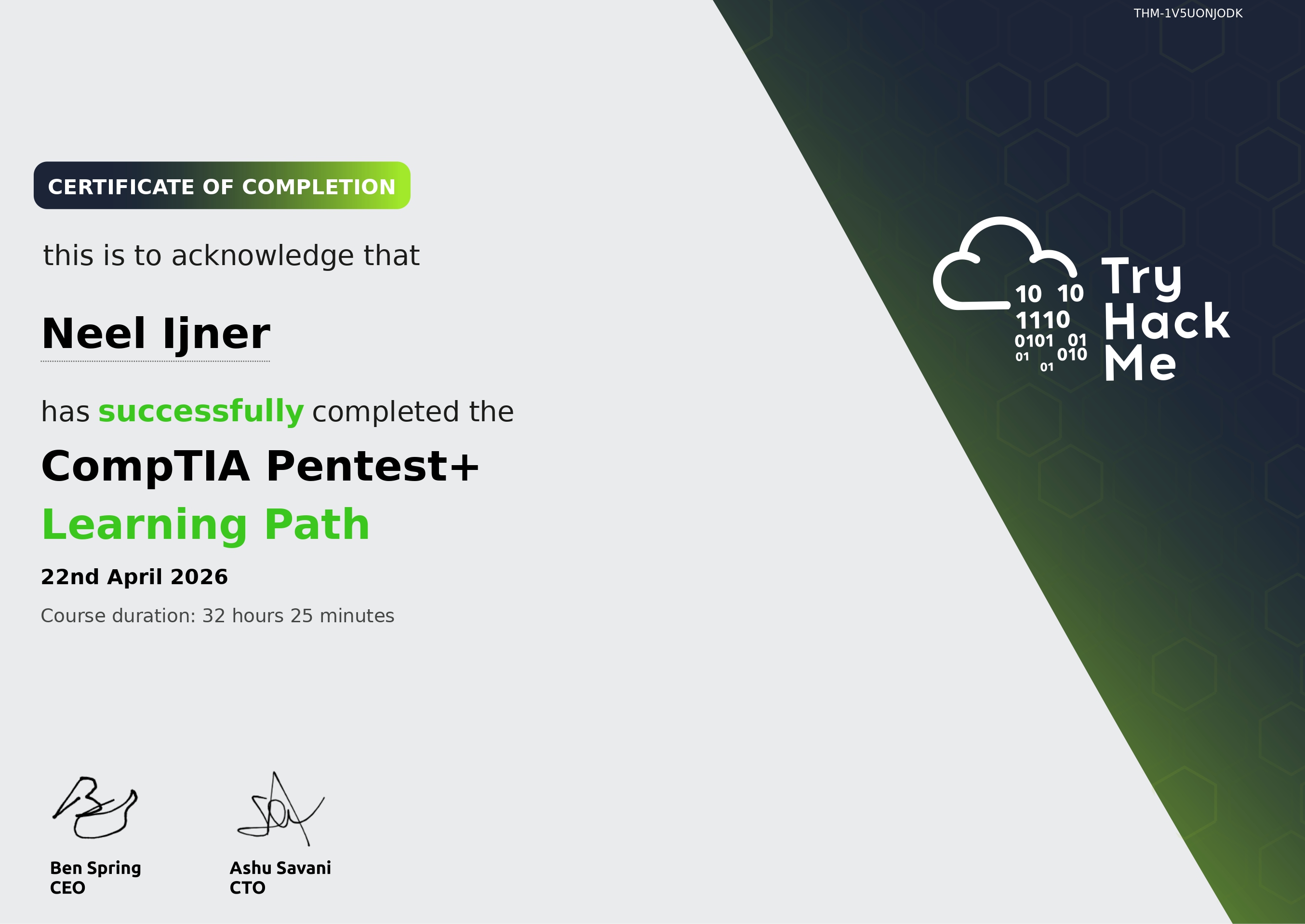
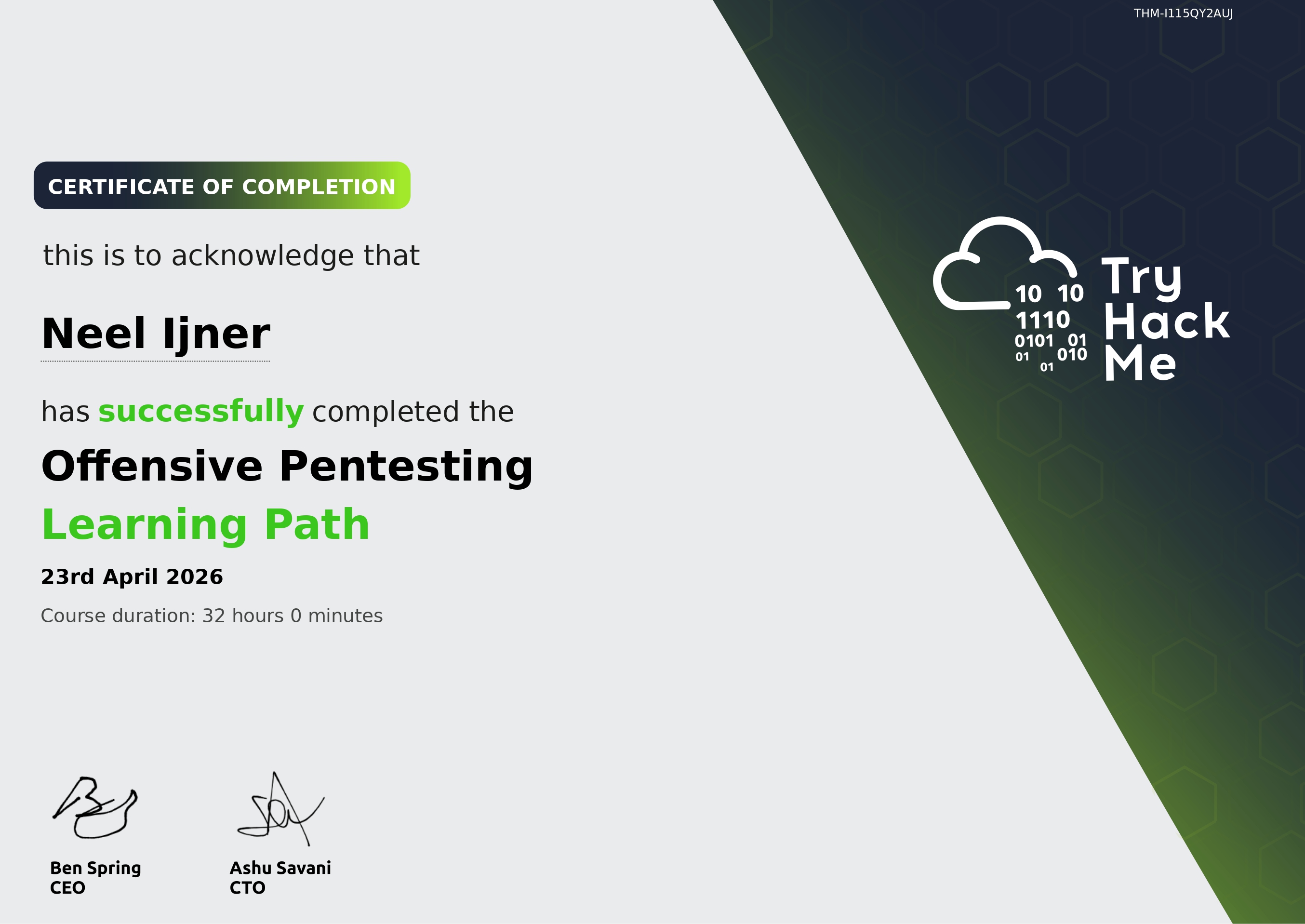
Here are the certificates for both paths:
Happy hacking!