

Completed the TryHackMe Pre-Security path. Some of it I already knew from my internship and HTB machines — but going through it properly helped connect the dots and fill in gaps I didn’t even know I had.
Here’s a quick breakdown of each module and what I took away.
Modules
1. Introduction to Cyber Security
Offensive vs defensive security, how they work together, and what different roles in cybersecurity actually do. Good orientation before everything else — especially the bit about how attackers and defenders think differently.
2. Network Fundamentals
OSI model, TCP/IP, how packets travel, types of network weaknesses. The most practically useful module in the path. Knowing how computers communicate with each other is the foundation of every single pentest and CTF — you can’t enumerate what you don’t understand.
3. How The Web Works
DNS resolution, HTTP requests and responses, how a browser talks to a server. If you’ve ever used Burp Suite and wondered what you’re actually intercepting — this module explains exactly that.
4. Computer Fundamentals
Hardware basics, how a CPU processes instructions, memory, storage, all the way up to cloud basics. Less directly useful for hacking but important for understanding what you’re targeting.
5. Operating Systems Basics
Windows and Linux fundamentals — file systems, user permissions, processes, CLI interaction. I use Linux daily but going through this methodically helped me understand things I was doing by muscle memory without fully knowing why.
6. Software Basics
How computers handle data, intro to Python, JavaScript, and SQL. The SQL section is worth paying attention to — understanding how databases work is directly relevant to SQL injection later.
7. Attacks and Defenses
How attackers think, how data is protected, real-world attack and defense scenarios. Good final module — ties everything together with actual security context.
What I Took Away
The biggest thing wasn’t any single concept — it was having everything properly connected. I knew bits and pieces from my VAPT internship and CTFs, but there were gaps I didn’t realise were there until I filled them.
The networking, web, and software modules especially — understanding how data flows end to end makes everything else make more sense. Exploitation, enumeration, traffic interception — it all sits on top of this foundation.
Certificate
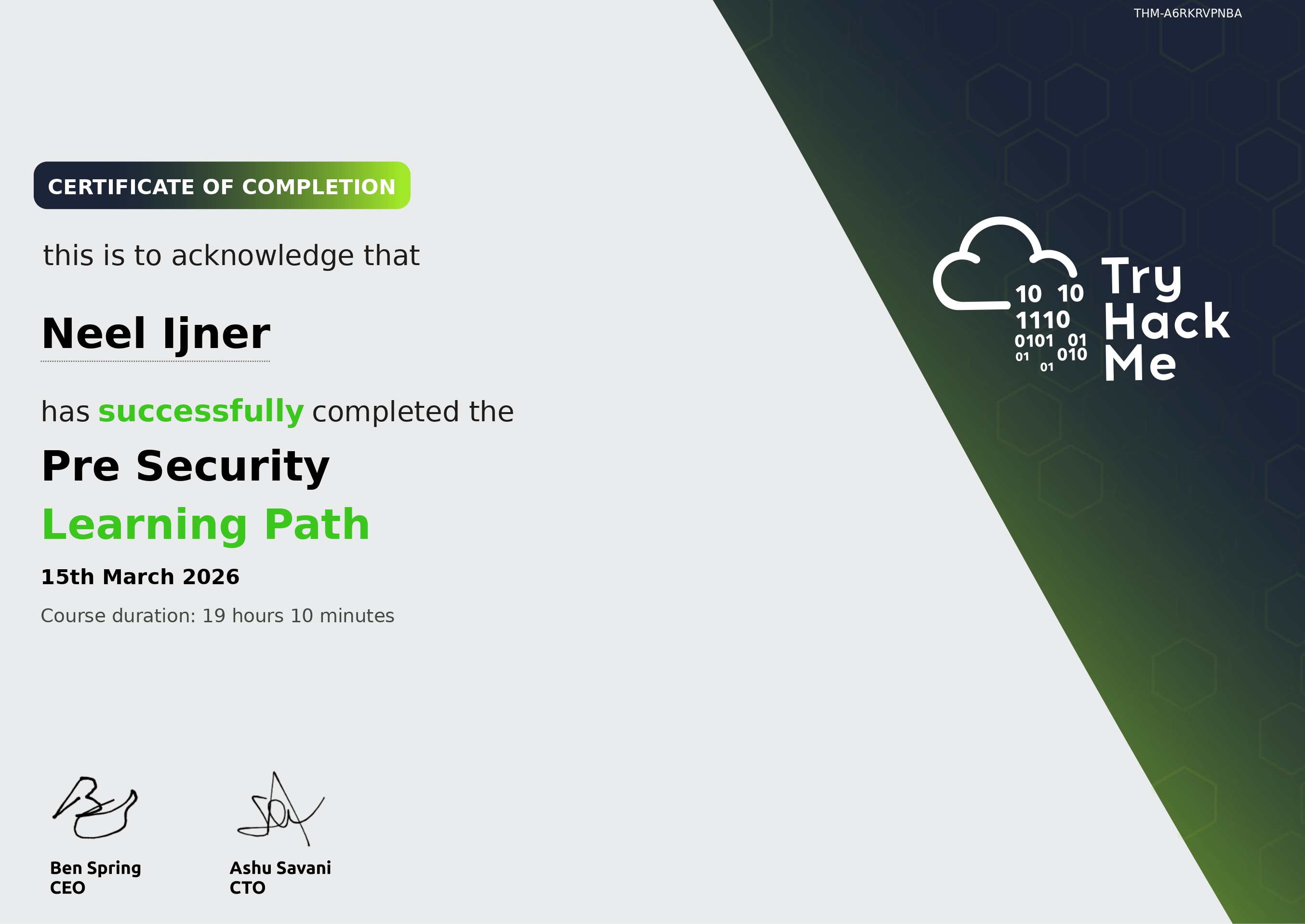
Verify: THM Certificate Link
Some information may be outdated